
Srečko
Kosovel
(Sežana,
18
March
1904
–
Tomaj,
27
May
1926)
A
Reasoned
Biography
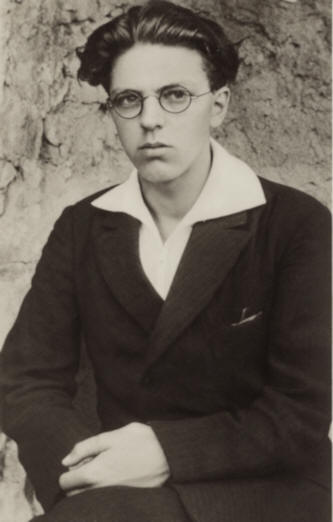
Methodological Note
This reasoned biography is conceived as a critical-biographical profile of Srečko Kosovel. It orders the main biographical, historical and interpretive data and connects them with several decisive shifts in his poetry: the Karst, the Slovene language, the condition of the Primorska, the crisis of the European post-war period, the avant-garde, the kons, and the posthumous reception of the manuscripts. The notes indicate the editions and studies used as a basis; for the poems, the central point of reference remains the Lepa Vida tradition of the Zbrano delo edited by Anton Ocvirk, supplemented by later editions and more recent critical acquisitions. The text gives priority to the poet’s intellectual profile, to the formation of his oeuvre, and to the key nodes of his critical reception; a line-by-line commentary, a systematic treatment of variants and the full reproduction of manuscript material are left to specialized editions.
_________________
Srečko Kosovel was born on 18 March 1904 in Sežana, in the Slovene Karst, then part of Austria-Hungary.¹ His life begins in a transitional zone: Sežana, Tomaj, Trieste, the Karst, the Slovene Littoral. These places are close to one another, yet crossed by different languages, affiliations, administrations and powers. The border enters early into school, language, the house, names; it also affects the way a community can recognize itself and defend its continuity.
The family first moved to Pliskovica and then to Tomaj, the village that would remain deeply bound to the poet’s imagination. His father, Anton Kosovel, was a teacher; his mother, Katarina, came from an environment in which education, Slovene culture and the sense of community carried real weight. Tomaj is the place of childhood and of the first perception of the world: pines, stones, the bora, houses, fields, Karst light. These are everyday presences. Only later would they enter the poems as elements of an inner geography.
War soon broke into this space. From 1915, with the opening of the Isonzo Front, the Karst became one of the most exposed areas of the Austro-Italian conflict. Plateaus, villages, roads and fields were absorbed by military logic. Kosovel was eleven years old. The world of stone, wind and fields was crossed by the roar of bombardments, the presence of soldiers, fear, scarcity and hunger. The Karst that would enter his poetry also arises from this early experience of vulnerability: a land of origin already marked by history, impressed in memory before it took literary form.
Trieste meanwhile acted as the other pole of his formation. It offered theatres, concerts, newspapers, circles, cultural contacts; a wider horizon than the Karst village. Before the war it still preserved a plural physiognomy: Italian, Slovene, German, Jewish, Slavic, Greek, commercial, Central European. For a young Slovene from the Karst it was attraction and tension. After the conflict, this plurality was damaged. The assertion of political Italianity, the burning of the Narodni dom in July 1920, nationalist and then Fascist pressure, and the progressive narrowing of public spaces for the Slovene language made the city one of the harshest sites of the Slovene question in the north-eastern Adriatic.
The First World War radically changed the world into which Kosovel had been born. First, the violence of the front imprinted on the Karst an experience of uncertainty and devastation; then the dissolution of Austria-Hungary and the Treaty of Rapallo in 1920 turned that condition into a lasting political problem. The Primorska and large areas inhabited by Slovenes and Croats were assigned to the Kingdom of Italy. A significant portion of the Slovene population remained outside the Kingdom of Serbs, Croats and Slovenes. Kosovel experienced these shifts during the decisive years of his formation: he was fourteen in 1918, sixteen at the time of Rapallo. The change of borders meant Italian administration, Italian schools, the Italianization of names, restrictions on the Slovene press and associations, and the contraction of the public presence of an entire community.²
The family story brought this pressure even closer. His father, a teacher, experienced the consequences of Italian language policy and, because he refused the exclusive use of Italian in school, was forced into retirement. Slovene thus ceased to be only a mother tongue or a literary language. For Kosovel, writing in Slovene meant participating in the continuity of a threatened community, preserving memory, responding to the administrative reduction of an identity. His own name also records the succession of powers: Srečko, Felix, Felice. The person is translated by successive bureaucracies.
After his early schooling, Kosovel moved into the scholastic and then student milieu of Ljubljana, where he came into contact with the city’s literary and intellectual life. He took part in circles, journals, lectures, publishing projects. His activity was early and feverish: he published in newspapers and periodicals, founded and directed Lepa Vida, collaborated with various reviews, associated with young intellectuals, organized meetings, and gathered around himself a small environment of poetic, theoretical and political discussion. His oeuvre grew at a speed that exceeded the capacity of the available editorial channels. Already in these years one of the nodes of his later reception emerges: Kosovel published little, left much, and a decisive part of his poetic image would depend on the posthumous organization of the manuscripts.
The first poetic period remains connected with the Karst and the Slovene lyric tradition. Texts such as Bori, Balada, Jutro na Krasu, Kraška jesen and Oktober show a landscape reduced to a few essential elements: pine, stone, wind, field, autumn, village, road, silence. Melancholy, premonition, death, mother, family and solitude appear in them; motifs close to Slovene Moderna, symbolism and lyric impressionism, already traversed by unrest. In Bori, the pines appear as dark presences, almost guardians: mute interlocutors of a familial and funerary question. Nature preserves what man cannot yet utter.³
The definition of Kosovel as the “poet of the Karst” arises from this part of the oeuvre and has its historical necessity. The Karst remains the primary interpretive key, without exhausting his figure. Through the original landscape Kosovel builds a first grammar of belonging and loss: land, language, house, memory, the stubborn poverty of matter. From there the poetry opens toward the European crisis, the social question, technology, formal experiment. Here one must avoid an excessively tidy articulation. In his production, very rapid and often manuscript-based, Karst lyricism, social tension, moral expressionism and constructivist experiments overlap, return, and mix. The parabola from the Karst to the kons helps one understand the general movement, but it must not erase the uneven nature of Kosovel’s laboratory.
In the following years Kosovel developed an expressionist, social, moral poetry. The crisis of post-war Europe enters the texts through images of guilt, blood, night, death, the city, the machine, poverty, humiliated people. In Ekstaza smrti the West appears as a civilization in decline, immersed in the red light of blood and guilt. In Pesem ponižanih the poor city is populated by children who have aged too soon, women in rags, unhealthy faces, extinguished eyes, dead hearts. In Ob orjaškem kolesu the industrial machine, the wheel and labour compose a scene of oppression and possible redemption. Poetry measures itself against man where history exposes him.
From this core arises an interest in the “new man”. The formula belongs to the climate of the first post-war period, to the avant-gardes, expressionism, socialism, and the crisis of the European bourgeoisie. In Kosovel it takes on above all a moral density: to step out of passivity, aestheticism, national egoism, the mechanization of man, literature reduced to ornament. The word must become barer, more exposed, more capable of shaking and building. The pain of one’s own world is no longer sufficient as a lyric theme; the historical forms that produce it must be recognized.
In this phase the relationship with Rabindranath Tagore is also important. Kosovel reads him, quotes him, accepts him as an interlocutor for a possible cultural liberation. Tagore offers him a model in which people, language, education, anti-imperialism and the universality of the human can be thought together. For a young Slovene from the Primorska, Bengali culture under British rule represents a distant yet recognizable condition: a language, a community, a civilization forced to measure itself against a power that considers itself superior. Through Tagore, Kosovel searches for a narrow path: to defend one’s own people without enclosing them in self-worship. The narod gains dignity when its liberation does not turn into a new national idolatry.⁴
This position gives his Sloveneness a wider breath. Kosovel defends language, school, culture, memory; he also perceives the risk of every identity hardened into possession. The Primorska appears to him as a concrete historical laceration and as part of a broader geography of oppression: colonies, linguistic minorities, impoverished labour, dominated communities. His national poetry brings territory into the question of European man, of justice, of the possibility of a community removed from the logic of domination.
From 1924-1925 Kosovel entered more decisively into the orbit of the avant-garde. The shift matured within a concrete network: Ljubljana and Trieste, youth journals, artistic groups, lectures, publishing projects, contacts with painters and graphic artists who were moving art beyond the picture and poetry beyond lyric continuity. Kosovel sensed that the word, if it wished to respond to the present, had to change body. It had to step onto the page differently, accept impact, montage, fragment, quotation, typographic incision. Poetry began to think itself as construction.⁵
The decisive figure in this shift is Avgust Černigoj, a Slovene artist born in Trieste in 1898, formed between the Triestine milieu, Munich and a brief but historiographically important stay at the Bauhaus in Weimar. When he returned to Ljubljana in 1924, he brought into the Slovene space an almost new visual vocabulary: construction, space, matter, dynamism, function, the overcoming of the picture as a self-sufficient surface. The Weimar stay was short, yet it remains important because of his contact with an environment in which painting, architecture, typography, theatre, movement and project were understood as part of a common transformation of languages. Around this atmosphere operate Moholy-Nagy, Kandinsky, the Russian avant-gardes, modern graphics, and the idea of the artist called to intervene in the construction of contemporary life.⁶
The relationship with Kosovel thickened between Tomaj and Ljubljana, through conversations, letters, meetings, projects and shared readings, at a moment when both were searching for a form capable of responding to the post-war crisis. According to Janez Vrečko, Kosovel did not visit the constructivist exhibition that Černigoj prepared in Ljubljana in August 1924. The detail is useful because it prevents simplification: Černigoj does not appear as a ready-made model, but as a visual and theoretical impulse that Kosovel receives, corrects, shifts, and transfers into the poetic page as a problem of construction.
For Kosovel, the encounter with this atmosphere confirmed an unrest already present in his research. Ornamental literature, enclosed in private confession or stylistic exercise, appeared to him increasingly inadequate for the European post-war period. Poetry had to find another carrying capacity: a more exposed structure, a more nervous breathing, a design able to receive rupture, montage, visual shock and the materials of the present. From here emerges the hypothesis of a constructed word: a word that occupies the page, isolates itself, arranges itself in space, enters into friction with numbers, abbreviations, slogans, quotations, technical fragments and formulas of contemporaneity.
On the public level, one of the most visible events of this transition was the constructivist exhibition that Černigoj prepared in Ljubljana in 1924, in a cultural environment still unprepared to receive such forms. For Kosovel, who according to Vrečko’s reconstruction did not visit the exhibition, this event should be understood above all as a sign of the atmosphere and of an emerging network, rather than as the direct cause of a poetic turn. The following year Černigoj prepared, at the Jakopič Pavilion, a didactic exhibition on the development of modern artistic tendencies up to constructivism, helping to shape more clearly, within the Slovene space, the vocabulary of construction, space and the modern function of art. Also in 1925, after his return to Trieste, with Giorgio Carmelich and Emilio Mario Dolfi he founded the School of Modern Activity and contributed to the formation of the environment that would lead to the Triestine Constructivist Group, with Edvard Stepančič, Ivan Vlah, Ivan Poliak, Zorko Lah and Thea Černigoj. Trieste is confirmed as a lively zone of the Slovene and north-Adriatic avant-garde, in contact with Central European culture, the Slavic space, Italy, graphics, theatre, architecture and the applied arts.⁷
Within this network, constructivism is a way of reshaping the relationship between art and the contemporary world. Form organizes materials, space, movement, function, public. For Kosovel the shift is essential. The page can behave as an active structure; the word as a constructive element; the reader as a subject called to move within the arrangement of signs. Černigoj’s visual lesson here becomes a poetic question.
The Triestine background also affects this transition. The city’s linguistic and national tensions, already decisive in Kosovel’s formation, now intertwine with typography, advertising, theatre, journals, applied arts and international ambitions. For Slovene culture under pressure, experimenting with new forms does not mean only updating artistic language; it also means seeking ways of presence, transmission and public visibility.
Kosovel did not belong, in the strict sense, to the Triestine Constructivist Group, yet he followed closely that experimental atmosphere which, through Černigoj, directly entered his thinking about poetry. In 1925 the two conceived Konstrukter, a constructivist journal that remained at the level of a project. The title is eloquent: in it the figure of the poet already approaches the constructor, no longer simply the author of verses, but the organizer of verbal, visual and ideological materials in a new form of the page. At the same time he imagined other instruments: the monthly Volja with Ivo Grahor; the radical publishing house Strelci; the series Integrali; a different orientation for Mladina, which his circle tried to push toward more advanced artistic and political positions. Precisely because they often remained unrealized, these projects are important biographical documents: they show an author engaged in the search for new poetic forms and for a different infrastructure of the word, made up of journals, series, groups, audiences and spaces of transmission.
Kosovel’s avant-garde thus took shape in an operational environment: letters, journals, sheets, lectures, manifestos, exhibitions, publishing plans, friendships, breaks, discussions. Alongside Černigoj there acted several European models that by then were central, not always as direct and precisely documented sources, more often as a theoretical and visual constellation of the age.
Tatlin offered the idea of the work as construction in space: materials occupy a position, create tensions, produce relations. Transferred into poetry, this principle alters the page. The verse loses its monopoly; the word is placed, isolated, tilted, enters into relation with void, margin, the direction of the gaze. The text flows and at the same time organizes itself spatially.
El Lissitzky adds a further passage. In the Proun works, painting, architecture and graphics enter an intermediate zone: surfaces suggest depth, rotation, crossing. For Kosovel, this horizon makes it possible to think of poetry as a perceptual structure in which the word acts at once as a visual and semantic sign. Meaning arises from the sentence, from position, from emptiness, from the impact between heterogeneous elements.
Moholy-Nagy introduces the question of light, movement, mobile perception. In the Bauhaus atmosphere, modern seeing is a change of viewpoint, crossing, montage. This element too enters, indirectly but recognizably, into the Kosovelian page: the reader must move, assemble anew, follow broken directions, accept an unstable surface, and reading acquires a physical and mental component.
A particular mediation comes from Zenit, the journal of Ljubomir Micić. Through zenitism Kosovel came into contact with a composite South-Slavic avant-garde in which futurism, expressionism, constructivism, Balkan mythology, cultural revolution and anti-petty-bourgeois polemic were intertwined. From Zenit came to him a strong energy of rupture: the rejection of the bourgeois public, typographic provocation, the myth of a new civilization, the artist as a figure meant to shake the present. On this very terrain a decisive difference opened up.
Janez Vrečko read this phase as a passage from an initial zenitist constructivism, more destructive and provocative, toward constructivism in the properly constructive sense, grounded in organization, meaning, space, movement, discipline of the spirit. His grid is useful, but it must be used without hardening it into an overly linear sequence. After the Ljubljana evenings of Branko Ve Poljanski in April 1925, Kosovel seems distant from a revolution that would be only formal, loud, spectacular. An isolated typographic rupture is not enough for him. Transformation must touch the content of European man: ethics, society, poverty, political violence, mechanization, the fate of oppressed communities.¹ Later studies, from Tokarz to Komelj, have made this framework more problematic, insisting on the simultaneity of destruction and construction, on the mobility of the manuscripts, and on the weight of editorial decisions in the very definition of the kons.
The Berlin journal Vešč / Veshch, linked to Ilya Ehrenburg and El Lissitzky, also contributes to this horizon. The constructivist artist is conceived there alongside the scientist, engineer and technician. The work enters into the idea of a new organization of the world.¹¹ Kosovel receives this suggestion and subordinates it to his own historical position.
Futurism, expressionism, constructivism, Bauhaus, zenitism, Russian art and modern graphics therefore enter his oeuvre through a precisely determined condition. The machine, the city, technology, the constructed page, montage, the word in space serve to question the crisis of man, the subordination of peoples, state violence, poverty, the erosion of minority languages, and the possibility of a new poetic ethics.
The manifesto Mehanikom, written in July 1925 and preserved in manuscript, belongs to this atmosphere. Between 1924 and 1926 Kosovel gathered, in only a few months, some of the radical questions of the avant-garde: the relation between word and space, montage, the page as visual surface, the crisis of the lyric subject, the social function of art, the machine, the city, the new reader. Poetry had to find a form capable of withstanding the shock of the present.
From here arises the area of the kons. The term refers to konstrukcija, construction. Before it designates a genre or a technique, it means a decision: to make poetry a spatial, mental, visual and ethical organism. In the kons the Slovene word, born in the Karst landscape and in a threatened community, enters the constructed page of the avant-garde. In the kons many lines of Kosovel’s biography are compressed: the Karst, the Slovene language, the Primorska, post-war Europe, Tagore, Černigoj, constructivism, zenitism, the machine, the new man, the crisis of lyric poetry. The constructed page brings these elements into friction. Kosovel’s strength lies in his capacity to transform a biography of the border into a poetic form able to speak to twentieth-century European culture.
In the kons the Karst loses the continuity of the lyric landscape and appears as a verbal nucleus, a fragment, compressed memory. In KONS II the term Kras appears within a sharp diagnosis of European civilization: civilization without heart, heart without civilization, death of Europe. The Karst thus assumes the function of a measure. It brings into the avant-garde page a poor hardness, a threatened language, a memory exposed to history.
The page of the kons works through isolated words, letters, numbers, formulas, abbreviations, slogans, lyric residues, economic hints, political and scientific fragments. Verse loses its prevailing linearity; reading advances through halts, leaps, returns, recompositions. The void also takes part in the construction.¹²
In Kons.5 Kosovel brings this procedure to an extreme density. The logic of capital, mathematics, the economic formula, degraded matter and monetary value are compressed into a rapid, almost diagrammatic structure. The text strikes the elements against one another without explaining them. Gold, manure, number, sign, poetic word and final laughter compose a small critical machine. Economic modernity appears as a system of violent equivalences, in which man can be absorbed by calculation.
Sferično zrcalo is one of the most demanding points of this period. The page functions as a surface of visual construction. The spherical mirror deforms what it reflects: it curves, alters, forces the eye to lose the security of frontal vision. Kosovel transfers this principle into poetry. The text acts as a curved mirror of modernity; it returns an unstable image of the European world and, at the same time, of its own poetic history. The large letter K may point to Kosovel, the constructor, constructivism. In the same text the memory of the earlier period rises again. Zlati čoln, connected with the lyric phase and the relationship with Tagore, is subjected to a new discipline. The poetic past is placed under question. The kons thus also acquires a self-critical value: Kosovel looks at his own Karst, symbolist, Tagorean lyricism and pushes its materials into a stricter structure. Poetry must bear the crisis in its very construction.¹³
In Kaleidoskop the constructive principle takes on another shape. The world appears as an unstable mobile composition of fragments. The gaze turns, the parts refract, meaning arises from the changing of relations. Here modern visual culture can be clearly felt: poetry approaches montage, graphics, dynamic perception.
Cirkus Kludsky brings into the kons the circus, the crowd, spectacle, anti-gravity, the ambiguous energy of the mass. The circus is a visual and social machine: it attracts, distracts, suspends, organizes bodies and gazes. Kosovel turns it into a modern dispositif. Behind the apparent lightness of spectacle one feels the tension between movement and manipulation, wonder and crowd, acrobatic freedom and the discipline of bodies.
In Kons: Tiger the machine enters as a disturbing figure. The reference to mechanization, futurist fascination, Taylorist order, the body reduced to function, and the atmosphere of Čapek and the modern robot allows Kosovel to treat technology as a human problem. The machine is speed, energy, progress and, at the same time, the absorption of man into function, the reduction of gesture to performance, the loss of inner complexity. Kosovel traverses technology with a vigilant gaze, between attraction and alarm..¹4
In the more directly political texts as well, such as Ej hej and Balkanska federacija, the constructive tension remains central. Beyond ideological proclamation, the poetic word seeks a form that could connect geography, history, peoples, revolution, the Balkans, Europe, tradition and avant-garde. Kosovel looks at politics as the possibility of collective construction, yet his gaze remains restless. Federation, people, revolution are areas that must be removed from closed nationalism and empty rhetoric.
The reading of the kons requires particular editorial caution. Kosovel left this part of the oeuvre largely in manuscript; its modern image passed through later classifications, selections and interpretations. Page form, dating, arrangement of material and editorial criteria directly affect reading. The series known to the contemporary reader does not simply coincide with a book conceived and approved for print by the author. The kons therefore remain an open critical field: texts of the Slovene avant-garde and, at the same time, mobile documents of an interrupted construction.15
Within this margin of caution, Vrečko’s distinction remains useful for understanding the internal development of Kosovel’s research. The first phase, closer to zenitism, preserves a destructive, provocative, anti-petty-bourgeois component, grounded in shock and rupture. After 1925, especially after the distancing from Branko Ve Poljanski’s Ljubljana evenings, Kosovel leans toward a stricter constructivism: the construction of meaning, the organization of space, the movement of reading, the discipline of the spirit. Formal revolution, cut off from this core, appears insufficient to him. Here the limit of any too-sharp periodization becomes visible: the same author continues to move among lyric residues, social urgency, graphic experiment and political project.
The kons should therefore be read as poetic, visual and ethical structures. They shake the lyric subject while preserving the demand for accountability; they accept the machine and record its danger; they absorb European constructivism and filter it through the Karst, Rapallo, Trieste, the Primorska, the threatened Slovene language. Slovene poetry thus enters the avant-garde laboratory with its own historical experience.
The radicality of the kons concerns above all the relationship between word, space and reading. The word matters because of the point at which it falls, because of the void around it, because of the relation it establishes with numbers, letters, margins, directions. The page is a small verbal architecture: shocks, pauses, correspondences, imbalances. Into this structure Kosovel brings his biography as compressed energy. The Karst reappears in it without landscape continuity: it emerges in nuclei, signs, fragments, as a hard memory against a civilization without heart. Pines, stone, the bora, language, the wounded community pass from the first lyric period into the most advanced construction of the Slovene avant-garde.16
Here Kosovel’s biography reaches its point of greatest density. The Karst poet, the young Slovene from the Primorska, the social author, the reader of Tagore, Černigoj’s interlocutor and the interlocutor of the European avant-gardes converge in a short, unstable, mobile form. Between 1924 and 1926 his oeuvre accelerates with rare speed: from landscape lyric to social poetry, from moral expressionism to verbo-visual construction, from the national question to the diagnosis of Europe. The brevity of his life sharpens this movement further. Kosovel died before he could fully organize his laboratory; his modernity therefore remains dependent also on the critical, editorial and interpretive work that reconstructed, debated and at times contested its image.
In 2026, on the centenary of his death, Kosovel again finds himself at the centre of broad institutional recognition. The Government of the Republic of Slovenia proclaimed 2026 the Kosovel Year, the Year of Srečko Kosovel, and recognized in his work one of the decisive presences of twentieth-century Slovene literature.¹7 The commemoration returns the poet to the places of his formation — Sežana, Tomaj, the Karst, Trieste, Gorizia — and presents his profile again in its full breadth: Karst poet, modern Slovene author, civic voice, experimenter connected with the avant-gardes.
The centenary programme is articulated through memorial initiatives, public ceremonies, scholarly meetings, theatrical and musical productions, educational activities, and cultural routes through Kosovelian places. The landscape thus once again becomes a space of transmission. Houses, paths, theatres, libraries and schools revive a poetic memory still capable of holding together local belonging, Slovene history and formal research.
Within this framework also belongs the catalogue Brezmejne niti / Fili senza confini. Kosovel: od besede do podobe / dalla parola all’immagine, printed in May 2026 by Colorprint, Kromberk-Nova Gorica, and edited by Lorella Klun. The project brings together KUD Goriška paleta of Nova Gorica, the Briški grič Cultural Association and Fotoklub Skupina 75 of Števerjan / San Floriano del Collio; it continues a path begun in 2024 within the “Year without Borders” and, in 2026, is dedicated to the Kosovel centenary. The texts are by Tanja Ambrožič, Gigo De Brea, Lorella Klun and Gregor Maver; the graphic design and layout are by Lorella Klun.
The catalogue reads Kosovel in the passage between word and image. Photographers, painters and ceramicists traverse his poetry and translate different nuclei: the Karst landscape, pines, stone, melancholy, light, the memory of places; then European unrest, the decomposition of space, movement, the tension toward the avant-garde. In Lorella Klun’s text, the poet’s path is presented through three principal moments: the lyric-impressionist beginning, the expressionist and social transition, the most radical phase of the kons, understood as poem-objects built from verbal fragments, typographic elements, formulas, slogans and the materials of modernity.
This visual reception confirms the mobility of Kosovel’s oeuvre. His verses continue to create images, surfaces, compositions, objects; they pass into photography, painting, ceramics, stage, music, graphics, educational and memorial practices. The word remains rooted in the Karst and precisely from that rootedness gains the power of transposition: it can become form, rhythm, sign, visual matter.
Kosovel’s biography remains open on this threshold. Places, the Slovene language, the Primorska, political pressure, the confrontation with the avant-gardes and the search for a new form gather with particular intensity in the kons. In them the Karst reappears as fragment, isolated word, critical memory; the page receives letters, numbers, formulas, slogans, lyric residues and signs of modernity.
Notes
1. For the basic biographical data on Kosovel, his family, Sežana, Tomaj, the years of formation and the first ordering of his poetic path, see Janez Vrečko, Srečko Kosovel, Založba ZRC, Ljubljana, 2011; Miklavž Komelj, ed., Srečko Kosovel. Vsem naj bom neznan. Neobjavljeni del zapuščine, Goga, Novo mesto, 2019.
2. On the historical context of the Primorska after the First World War, the Julian-Adriatic border, Slovene memory and the political and cultural consequences of annexation to the Kingdom of Italy, see Marta Verginella, Il confine degli altri. La questione giuliana e la memoria slovena, with a foreword by Guido Crainz, Donzelli, Rome, 2008.
3. On Kosovel’s first lyric production, his relationship with the Karst and his initial continuity with the Slovene poetic tradition, see Srečko Kosovel, Zbrano delo, ed. Anton Ocvirk, Državna založba Slovenije, Ljubljana, 1946-1977, vols. I, II, II/2, III, III/1; Janez Vrečko, Srečko Kosovel, Založba ZRC, Ljubljana, 2011. For a stricter philological use of individual poems, control of the chosen edition and, where necessary, of line numbering is indispensable.
4. On Kosovel’s relationship with Tagore, with the concept of narod and with a conception of Slovene culture that is not exclusively nationalist, see Ana Jelnikar, “Srečko Kosovel and Rabindranath Tagore: Points of Departure and Identification”, in Asian and African Studies, vol. 14, no. 1, 2010, pp. 79-95; Janez Vrečko, Srečko Kosovel, Založba ZRC, Ljubljana, 2011; Matevž Kos, Fragmenti o celoti. Poskusi s slovenskim pesništvom, LUD Literatura, Ljubljana, 2007.
5. For the passage toward the avant-garde, constructivism and the kons, as well as the question of journals, publishing projects and contacts with the Slovene and Triestine artistic milieu, see Janez Vrečko, Srečko Kosovel, Založba ZRC, Ljubljana, 2011; Miklavž Komelj, ed., Srečko Kosovel. Vsem naj bom neznan. Neobjavljeni del zapuščine, Goga, Novo mesto, 2019.
6. On Černigoj, his Triestine formation, his passage through Munich and the Bauhaus in Weimar, and the constructivist exhibition in Ljubljana in 1924, see Igor Zabel, Avgust Černigoj, Moderna galerija, Ljubljana, 1998; Peter Krečič, Slovenska zgodovinska avantgarda, Cankarjeva založba, Ljubljana, 1989; Janez Vrečko, Srečko Kosovel, Založba ZRC, Ljubljana, 2011.
7. On the School of Modern Activity, the Triestine group and Černigoj’s role in the Slovene and north-Adriatic avant-garde, see Peter Krečič, Slovenski konstruktivizem in njegovi evropski okviri, Moderna galerija, Ljubljana, 1979; Marko Kravos, ed., I Constructivisti triestini, Studio Tommaseo, Trieste, 1991; Janez Vrečko, Srečko Kosovel, Založba ZRC, Ljubljana, 2011.
8. On the project Konstrukter, the relations between Kosovel and Černigoj, and Kosovel’s publishing plans in 1925-1926, see Janez Vrečko, Srečko Kosovel, Založba ZRC, Ljubljana, 2011; Miklavž Komelj, ed., Srečko Kosovel. Vsem naj bom neznan, Goga, Novo mesto, 2019; Anton Ocvirk, ed., Srečko Kosovel. Integrali ’26, Cankarjeva založba, Ljubljana, 1967.
9. On the relationship between Kosovel, European constructivism, Tatlin, El Lissitzky, Moholy-Nagy, the Bauhaus and the culture of avant-garde journals, see Janez Vrečko, Srečko Kosovel, Založba ZRC, Ljubljana, 2011; Peter Krečič, Slovenski konstruktivizem in njegovi evropski okviri, Moderna galerija, Ljubljana, 1979; Peter Krečič, Slovenska zgodovinska avantgarda, Cankarjeva založba, Ljubljana, 1989.
10. On the mediation of Zenit, the Ljubljana evenings of Branko Ve Poljanski and the distinction between the “zenitist” phase and the constructive phase of Kosovel’s constructivism, see Janez Vrečko, Srečko Kosovel, Založba ZRC, Ljubljana, 2011; Miklavž Komelj, ed., Srečko Kosovel. Vsem naj bom neznan, Goga, Novo mesto, 2019; Bożena Tokarz, Med destrukcijo in konstrukcijo. O poeziji Srečka Kosovela v kontekstu konstruktivizma, Literarno-umetniško društvo Literatura, Ljubljana, 2013.
11. On the relationship between Kosovel, Vešč / Veshch, Ehrenburg, El Lissitzky and the constructivist conception of the artist as collaborator of technicians, engineers and scientists, see Janez Vrečko, Srečko Kosovel, Založba ZRC, Ljubljana, 2011; Ilya Ehrenburg, El Lissitzky, eds., Vešč / Gegenstand / Objet, Berlin, 1922; Peter Krečič, Slovenska zgodovinska avantgarda, Cankarjeva založba, Ljubljana, 1989.
12. For the definition of the kons as texts of poetic and spatial construction, and for their relationship to the concept of konstrukcija, see above all Janez Vrečko, Srečko Kosovel, Založba ZRC, Ljubljana, 2011; idem, Srečko Kosovel, Croatian translation, Zagreb, 2020. For the history of reception, Anton Ocvirk, ed., Integrali ’26, Cankarjeva založba, Ljubljana, 1967, remains fundamental, though it should be used with the reservations imposed by later critical debate on the posthumous organization of the material.
13. On Sferično zrcalo and its centrality in the constructivist reading of Kosovel, Vrečko particularly emphasizes the role of space, movement, the large letter K and the critical relationship with Zlati čoln. The interpretation of the page as visual construction remains one of the most fruitful acquisitions of recent criticism, provided it is not flattened into a simple literary transfer of the procedures of visual art; Janez Vrečko, “Prostor, čas in gibanje pri Srečku Kosovelu”, in 55. Seminar slovenskega jezika, literature in kulture, Faculty of Arts, Ljubljana, 2019, pp. 55-62.
14. On the relationship between the kons, the machine, Taylorist logic, futurist culture and the European atmosphere of mechanization, see Janez Vrečko, Srečko Kosovel, Založba ZRC, ZRC SAZU, Ljubljana, 2011; Peter Krečič, Slovenska zgodovinska avantgarda, Cankarjeva založba, Ljubljana, 1989; Bożena Tokarz, Med destrukcijo in konstrukcijo, LUD Literatura, Ljubljana, 2013.
15. The modern reception of the kons is decisively affected by the posthumous editorial history of Kosovel’s oeuvre. Kosovel did not have time to publish this part of his production organically; its image was therefore built through later selections, editions, classifications and interpretations. See Anton Ocvirk, ed., Srečko Kosovel. Integrali ’26, Cankarjeva založba, Ljubljana, 1967; Alfonz Gspan, ed., Neznani Srečko Kosovel, Prostor in čas, Ljubljana, 1974; Marjan Dolgan, ed., Srečko Kosovel. Iz zapuščine, Založba ZRC, Ljubljana, 2009; Miklavž Komelj, ed., Srečko Kosovel. Vsem naj bom neznan, Goga, Novo mesto, 2019.
16. For a reading of the kons as spatial, verbo-visual and at the same time ethical constructions, and for their role in defining Kosovel’s avant-garde modernity, see Janez Vrečko, Srečko Kosovel, Založba ZRC, ZRC SAZU, Ljubljana, 2011; Miklavž Komelj, ed., Srečko Kosovel. Vsem naj bom neznan. Neobjavljeni del zapuščine, Goga, Novo mesto, 2019. For the broader framework of the Slovene historical avant-garde, see Peter Krečič, Slovenska zgodovinska avantgarda, Cankarjeva založba, Ljubljana, 1989.
17. For the institutional recognition of 2026 as the Kosovel Year, see Government of the Republic of Slovenia, Leto 2026 je leto pesnika Srečka Kosovela, 13 February 2025. For the programme of commemorative initiatives, see Kosovel.si, Osrednji dogodki Kosovelovega leta 2026, 19 January 2026; Kosovelov dom Sežana, Kosovelovo leto 2026 v Kosovelovem domu Sežana, 2 February 2026; Visit Kras, Kosovelovo leto – Doživetja Krasa skozi pesnikovo dediščino, 2026.
Bibliography
Editions, Catalogues and Primary Sources
Lorella Klun, ed., Brezmejne niti / Fili senza confini. Kosovel: od besede do podobe / dalla parola all’immagine, catalogue, KUD Goriška paleta / Kulturno društvo Briški grič / Fotoklub Skupina 75, Nova Gorica–Števerjan, 2026; printed by Colorprint, Kromberk-Nova Gorica.
Srečko Kosovel, Aspri ritmi / Ostri ritmi, eds. Jolka Milič and Martina Kafol, Italian translation by Jolka Milič, ZTT-EST, Trieste, 2024.
Srečko Kosovel, Vsem naj bom neznan. Neobjavljeni del zapuščine, 2 vols., collected, edited and introduced by Miklavž Komelj, Goga, Novo mesto, 2019.
Srečko Kosovel, Zbrane pesmi, collected and edited by Neža Zajc, introductory study by Igor Grdina, Študentska založba / Beletrina, Ljubljana, 2013.
Srečko Kosovel, Iz zapuščine. Pesmi, neobjavljene v Zbranem delu, ed. Marjan Dolgan, Založba ZRC, Ljubljana, 2009; 2nd ed. 2010.
Tatjana Rojc, ed., Mon cher ami – Dragi Srečko. Neobjavljena pisma Srečku Kosovelu, Goriška Mohorjeva družba, Gorizia, 2007.
Srečko Kosovel, Ikarjev sen. Dokumenti, rokopisi, pričevanja, eds. Aleš Berger and Ludwig Hartinger, Mladinska knjiga, Ljubljana, 2004.
Srečko Kosovel, Stano Kosovel, Boris Pahor, Milko Bambič, Srečko Kosovel v Trstu, Zaliv, Trieste, 1970.
Srečko Kosovel, Integrali ’26, selected and edited by Anton Ocvirk, Cankarjeva založba / Založništvo tržaškega tiska, Ljubljana–Trieste, 1967.
Srečko Kosovel, Zbrano delo, ed. Anton Ocvirk, Državna založba Slovenije, Ljubljana, 1946-1977, vols. I, II, II/2, III, III/1.
Srečko Kosovel, Zlati čoln, Primorska založba, Koper, 1954.
Srečko Kosovel, Pesmi, ed. Alfonz Gspan, Odbor za izdajo pesmi, Ljubljana, 1927.
Ilya Ehrenburg, El Lissitzky, eds., Vešč / Gegenstand / Objet, Berlin, 1922.
Critical Studies on Kosovel
Tomaž Toporišič, “Kosovel in njegovi hibridni konstruktivistični dnevniki”, in Slavia Centralis, 2, 2024.
Janez Vrečko, Srečko Kosovel. Monografija. 2. dio, Croatian translation by Ksenija Premur, Naklada Lara / Scientific Publishing House of the Faculty of Arts, University of Ljubljana, Zagreb–Ljubljana, 2020.
Janez Vrečko, Srečko Kosovel. Monografija. 1. dio, Croatian translation by Ksenija Premur, Naklada Lara / Scientific Publishing House of the Faculty of Arts, University of Ljubljana, Zagreb–Ljubljana, 2019.
Janez Vrečko, “Prostor, čas in gibanje pri Srečku Kosovelu”, in 55. Seminar slovenskega jezika, literature in kulture, Faculty of Arts, Ljubljana, 2019, pp. 55-62.
Janez Vrečko, Constructivism and Kosovel, English translation by David Limon, KSEVT / Scientific Publishing House of the Faculty of Arts, University of Ljubljana, Vitanje–Ljubljana, 2015.
Bożena Tokarz, Med destrukcijo in konstrukcijo. O poeziji Srečka Kosovela v kontekstu konstruktivizma, Slovene translation by Primož Čučnik, Literarno-umetniško društvo Literatura, Ljubljana, 2013.
Janez Vrečko, Srečko Kosovel, Založba ZRC, Ljubljana, 2011.
Ana Jelnikar, “Srečko Kosovel and Rabindranath Tagore: Points of Departure and Identification”, in Asian and African Studies, vol. 14, no. 1, 2010, pp. 79-95.
Marko Juvan, “Kosovelova referenca na Čapka in njen kontekst”, in Primerjalna književnost, vol. 32, no. 1, Ljubljana, 2009, pp. 177-192.
Boris Pahor, Srečko Kosovel: pričevalec zaznamovanega stoletja, introductions by Tatjana Rojc and Janez Vrečko, translation by Nika Simoniti, Scientific Publishing House of the Faculty of Arts, Ljubljana, 2008.
Kosovelova poetika / Kosovel’s Poetics, special issue of Primerjalna književnost, vol. 28, no. 3, Slovene Comparative Literature Association, Ljubljana, 2005.
Marko Juvan, “Srečko Kosovel and the Hybridity of Modernism”, in Primerjalna književnost, vol. 28, special issue Kosovel’s Poetics, Ljubljana, 2005, pp. 189-204.
Franc Zadravec, Srečko Kosovel 1904–1926, Lipa / Založništvo tržaškega tiska, Koper–Trieste, 1986.
Janez Vrečko, Srečko Kosovel, Slovenska zgodovinska avantgarda in zenitizem, Obzorja, Maribor, 1986.
Alfonz Gspan, ed., Neznani Srečko Kosovel. Neobjavljeno gradivo iz pesnikove zapuščine ter kritične pripombe h Kosovelovemu Zbranemu delu in Integralom, offprint from Prostor in čas, Ljubljana, 1974.
Historical, Triestine and Art-Historical Context
Salvatore Pappalardo, Modernism in Trieste: The Habsburg Mediterranean and the Literary Invention of Europe, 1870–1945, Bloomsbury Academic, New York, 2021.
Jože Pirjevec, Primorska in fašizem. Zgodovinski vidiki, ZTT-EST, Trieste, 2008.
Marta Verginella, Il confine degli altri. La questione giuliana e la memoria slovena, Donzelli, Rome, 2008.
Peter Krečič, Avgust Černigoj, Nova revija, Ljubljana, 1999.
Igor Zabel, Avgust Černigoj, Moderna galerija, Ljubljana, 1998.
Marko Kravos, ed., I Constructivisti triestini, Studio Tommaseo, Trieste, 1991.
Peter Krečič, Slovenska zgodovinska avantgarda, Cankarjeva založba, Ljubljana, 1989.
Bruno Passamani, Dall’alcova d’acciaio al Tank ai Macchi 202. Frontiere d’avanguardia. Gli anni del Futurismo nella Venezia Giulia, exhibition catalogue, Brescia, 1985.
Peter Krečič, Slovenski konstruktivizem in njegovi evropski okviri, Moderna galerija, Ljubljana, 1979.
Basic Online Bibliography
Government of the Republic of Slovenia, Leto 2026 je leto pesnika Srečka Kosovela, Gov.si, 2025.
Kosovelov dom Sežana, Kosovelovo leto 2026 / Kosovelov rokovnik, Sežana, 2026.
France Koblar, “Kosovel, Srečko (1904–1926)”, in Slovenski biografski leksikon, digital edition, Slovenska biografija / ZRC SAZU.
Kosovel.si, Osrednji dogodki Kosovelovega leta 2026, 19 January 2026.
Visit Kras, Kosovelovo leto – Doživetja Krasa skozi pesnikovo dediščino, 2026.